Tool lists with no project context
A row of logos says you have opened the software. A bullet that names the tool, the data, and the decision says you can use it. Show both, with the evidence in the bullet.
Analyst resumes are judged on two things: whether you can use the tools the team uses, and whether you can turn an analysis into a decision. A list of libraries is not evidence. Hiring managers look for the question you answered, the data you handled, and what changed because of the answer.
Templates
Pick a layout, then make the content specific. Every option below keeps a single parseable column.
Data analyst with 5 years turning operational data into decisions in ecommerce and financial services. Strong in SQL, Python, and BI dashboard design, with a focus on measurement that non-technical teams can act on.
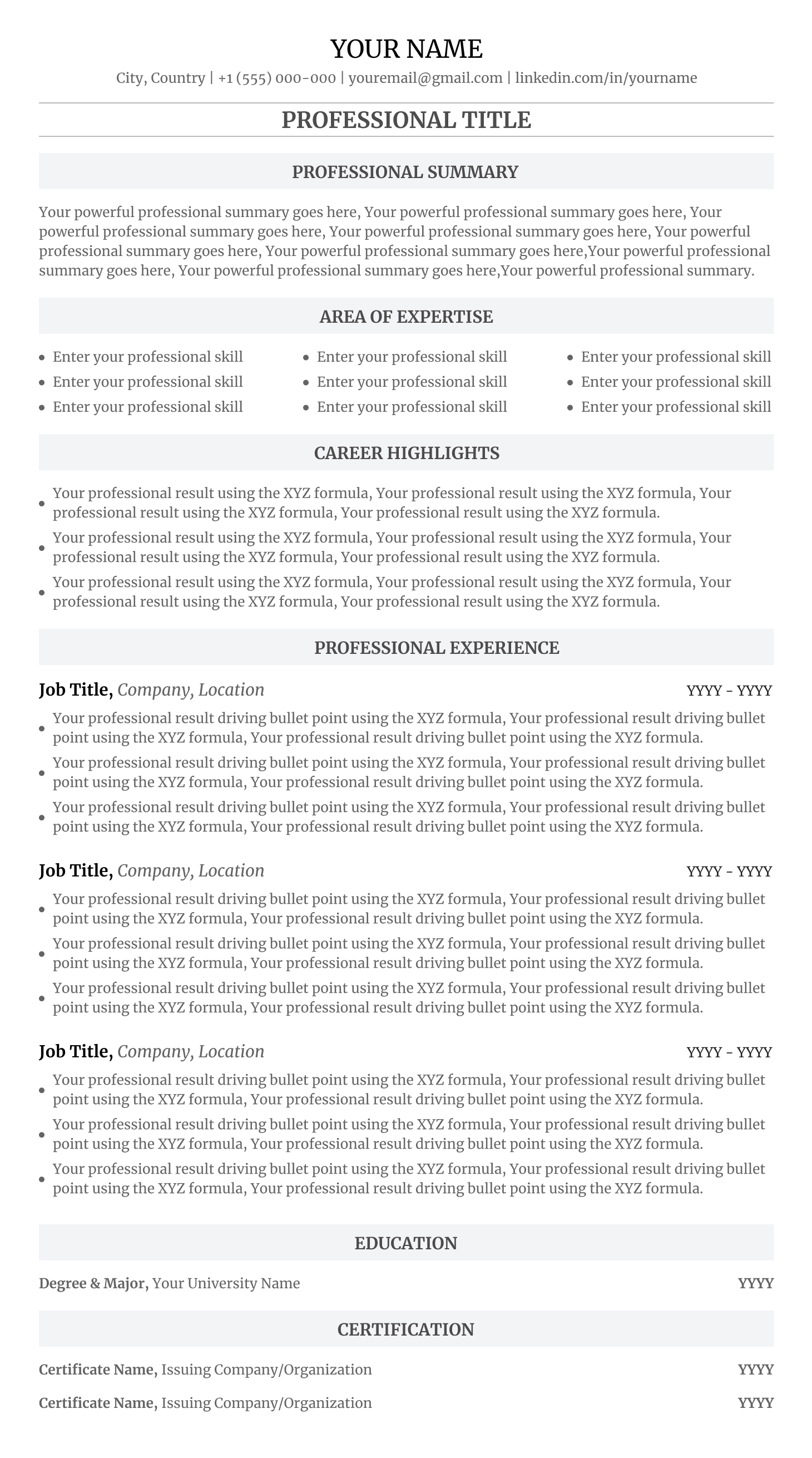
Professional
An analyst-focused layout with room for tools and selected projects without turning into a wall of text.
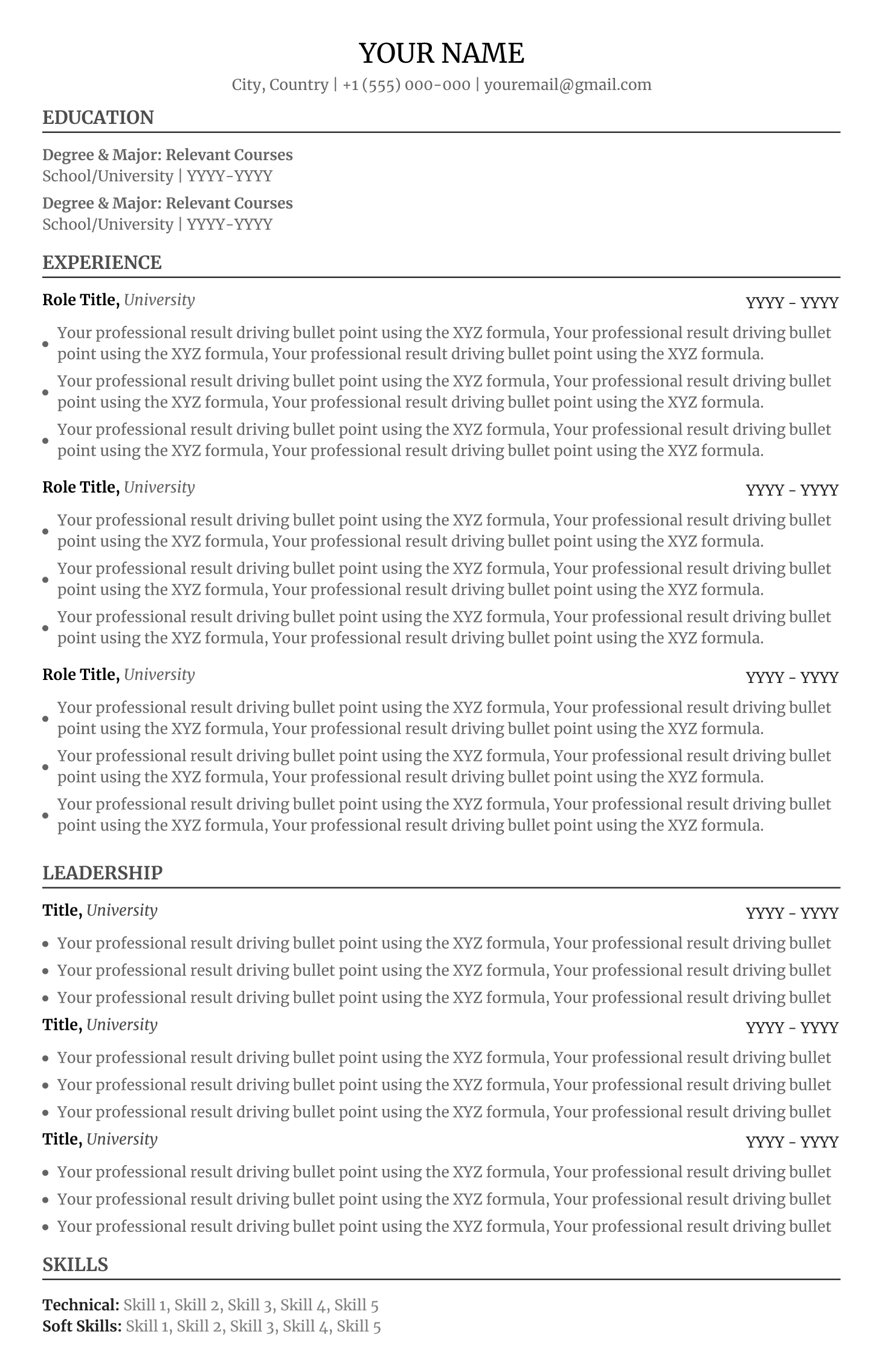
Professional
The most parser-safe option for large company portals and staffing agencies.
Data analyst with 5 years turning operational data into decisions in ecommerce and financial services. Strong in SQL, Python, and BI dashboard design, with a focus on measurement that non-technical teams can act on.
SQL, Python, R, Tableau, Power Bi, dbt, Excel, A/B testing, Data modeling, Statistics, Data visualization, Stakeholder communication
Boston University
Modern
A clean single-column resume for analysts who need to fit tools, projects, and outcomes on one page.
What gets screened
These are the details that survive the first scan. If one is missing, the resume is read as a weaker match before anyone reaches the bullets.
SQL depth and data modeling, not just the word SQL in a skills list.
BI tools by name: Tableau, Power BI, and Looker, with the audience each dashboard served.
Python or R for analysis, including the libraries that matter for the role.
A business outcome tied to the work: revenue, cost, churn, conversion, or time saved.
Example bullets
Replace the brackets with your own numbers. Keep the structure, and drop any bullet that does not match your experience.
Avoid these
A row of logos says you have opened the software. A bullet that names the tool, the data, and the decision says you can use it. Show both, with the evidence in the bullet.
A dashboard is not an outcome. Name who used it and what they changed. "Weekly churn dashboard for the retention team" is stronger than "created dashboards."
Model accuracy is useful, but hiring managers outside the data team need the decision it supported. Pair the technical result with the revenue, cost, or time it affected.
FAQ
Not required, but two or three short project writeups help. For each one, state the question, the data, the method, and the result. A notebook with no explanation is less useful than a one-page summary.
List the tools named in the job post first, then your strongest ones. Do not list a tool you cannot discuss in an interview, because the skills section is often used as an interview checklist.
Technical enough to show method, concise enough for a business reader. Name the tool and the technique, then spend the rest of the bullet on the decision it supported.
Yes, but the resume has to carry the proof. Emphasize SQL, shipped analysis, and transferable domain knowledge. A certificate helps at the margin; a project with a real question and result helps more.
Keep going
Stack, scope, and shipped systems written for both the parser and the engineer reading it.
View guideBudget, team size, and delivery outcomes instead of a list of methodologies.
View guideVolume, systems, and resolution metrics for high-volume support hiring.
View guideOne tailored resume, every free template, 10 AI rewrites,
and 3 PDF exports. No credit card.